← Back
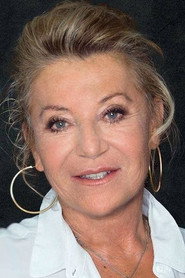
Sheila
AKA: Annie Chancel · Sheila & B. Devotion
Acting
Born: 1945
Créteil, Seine [now Val-de-Marne], France
25 Global Credits
🔥 0.4 Popularity
0 Rank Score
0 Hearts
0 Votes
Biography
Annie Chancel (born 16 August 1945), known as Sheila, is a French pop singer who became successful as a solo artist in the 1960s and 1970s, and was also part of the duo Sheila & Ringo with her husband singer Ringo. She also fronted a disco act called Sheila and B. Devotion. Her stage name came from the title of her first release, a French cover version of "Sheila", a hit by Tommy Roe.
Throughout her career, Sheila has sold more than 85 million records worldwide.
Sheila started her musical career in 1962, after being noticed by Claude Carrère, a French record producer and songwriter. Her parents signed a contract with Carrère for her, when she was 16; the contract led to an artistic collaboration which lasted for more than 20 years. In 1995, a lawsuit put an end to this life-time deal. She entered into a long royalties battle against her former producer, which she won.
Sheila had numerous hits in the 1960s, 1970s and 1980s, playing the typical 'girl next door'. Her first hit was "L'école est finie" ("School is over"), in 1962 (1 million copies). It reached the #1 position in France. In 1964, she recorded and released "Vous Les Copains, Je Ne Vous Oublierai Jamais", her French adaptation of the international hit, "Do Wah Diddy Diddy" as popularized by Manfred Mann, also charted. Notably, the original pop song was sung by The Exciters from a year earlier in 1963.
In the movie, Eight Women, Ludivine Sagnier sang her 1963 hit "Papa t'es plus dans l'coup" ("Daddy, you are not in on it anymore"). Sheila's music also featured in the 1996 François Ozon film Une robe d'été (A Summer Dress). The character Sébastien is a fan of Sheila, and Sheila's version of Cher's "Bang Bang (My Baby Shot Me Down)" was on the soundtrack. "Les rois mages" also featured in "Ma vie en rose", a 1997 gender-bender film, "Love me baby", in 1978, "Attention les enfants regardent", with Alain Delon, "Spacer" in "Podium" (2004).
After more than a decade of targeting the French teen music audience, mainly in French but also in Spanish, German and Italian, Sheila made a change in her career by releasing "Les Femmes (Qu'y a-t-il dans le cœur des femmes)", a song by Christine Charbonneau in 1976. "Les Femmes" climbed to number one and stayed in the chart for three months. "Les Femmes" brought to Sheila a revolution of modernity, making her one of the idols of the French pop music.
In 1977, she started singing in English as Sheila and B. Devotion (in some countries records were under the name "Sheila B. Devotion") and changed her style to disco music. Sheila was accompanied by three male dancers who made up the "Black Devotion" in her routine. She enjoyed international success with hits such as "Singin' in the Rain", "Love Me Baby", "You Light my Fire" and "Spacer" (from the album King of the World, produced by Chic). "Spacer" is one of her biggest hits with more than 5 million copies sold worldwide. According to different interviews, she often said her experience with Chic completely changed her way of working and singing. It was the beginning of a deep artistic disagreement with her French manager Carrère, which made Sheila leave France, move to New York "to start all over again" and studied at the Actors Studio. ...
Source: Article "Sheila (French singer)" from Wikipedia in English, licensed under CC-BY-SA.
Throughout her career, Sheila has sold more than 85 million records worldwide.
Sheila started her musical career in 1962, after being noticed by Claude Carrère, a French record producer and songwriter. Her parents signed a contract with Carrère for her, when she was 16; the contract led to an artistic collaboration which lasted for more than 20 years. In 1995, a lawsuit put an end to this life-time deal. She entered into a long royalties battle against her former producer, which she won.
Sheila had numerous hits in the 1960s, 1970s and 1980s, playing the typical 'girl next door'. Her first hit was "L'école est finie" ("School is over"), in 1962 (1 million copies). It reached the #1 position in France. In 1964, she recorded and released "Vous Les Copains, Je Ne Vous Oublierai Jamais", her French adaptation of the international hit, "Do Wah Diddy Diddy" as popularized by Manfred Mann, also charted. Notably, the original pop song was sung by The Exciters from a year earlier in 1963.
In the movie, Eight Women, Ludivine Sagnier sang her 1963 hit "Papa t'es plus dans l'coup" ("Daddy, you are not in on it anymore"). Sheila's music also featured in the 1996 François Ozon film Une robe d'été (A Summer Dress). The character Sébastien is a fan of Sheila, and Sheila's version of Cher's "Bang Bang (My Baby Shot Me Down)" was on the soundtrack. "Les rois mages" also featured in "Ma vie en rose", a 1997 gender-bender film, "Love me baby", in 1978, "Attention les enfants regardent", with Alain Delon, "Spacer" in "Podium" (2004).
After more than a decade of targeting the French teen music audience, mainly in French but also in Spanish, German and Italian, Sheila made a change in her career by releasing "Les Femmes (Qu'y a-t-il dans le cœur des femmes)", a song by Christine Charbonneau in 1976. "Les Femmes" climbed to number one and stayed in the chart for three months. "Les Femmes" brought to Sheila a revolution of modernity, making her one of the idols of the French pop music.
In 1977, she started singing in English as Sheila and B. Devotion (in some countries records were under the name "Sheila B. Devotion") and changed her style to disco music. Sheila was accompanied by three male dancers who made up the "Black Devotion" in her routine. She enjoyed international success with hits such as "Singin' in the Rain", "Love Me Baby", "You Light my Fire" and "Spacer" (from the album King of the World, produced by Chic). "Spacer" is one of her biggest hits with more than 5 million copies sold worldwide. According to different interviews, she often said her experience with Chic completely changed her way of working and singing. It was the beginning of a deep artistic disagreement with her French manager Carrère, which made Sheila leave France, move to New York "to start all over again" and studied at the Actors Studio. ...
Source: Article "Sheila (French singer)" from Wikipedia in English, licensed under CC-BY-SA.
Known For

Il était une fois Champs-Élysées
Self (archive footage)
2022 · FR

Quelle époque !
Self - Guest
2022 · FR

Mask Singer
Self
2019 · FR

La Boîte à secrets
Self
2019 · FR
Quotidien
Self - Guest
2016 · FR

Danse avec les stars
Self - Candidate
2011 · FR

C à vous
Self - Guest
2009 · FR

Belle et Bum
Self
2003 · CA
Full Credits
| Show / Title | Year | Credit / Role |
|---|---|---|
| Il était une fois Champs-Élysées | 2022 | Self (archive footage) |
| Quelle époque ! | 2022 | Self - Guest |
| Mask Singer | 2019 | Self |
| La Boîte à secrets | 2019 | Self |
| Quotidien | 2016 | Self - Guest |
| Danse avec les stars | 2011 | Self - Candidate |
| C à vous | 2009 | Self - Guest |
| Belle et Bum | 2003 | Self |
| Star Academy | 2001 | Self |
| Stars à domicile | 2001 | Self |
| Vivement dimanche | 1998 | Self |
| Le monde est à vous | 1987 | Self |
| Sacrée soirée | 1987 | Self |
| Victoires de la musique | 1985 | Self |
| La Chance aux chansons | 1984 | Self (archive footage) |
| L'Académie des 9 | 1982 | Self |
| Champs-Elysées | 1982 | Self |
| Fan School | 1977 | Self |
| 30 millions d'amis | 1976 | Self |
| Numéro un | 1975 | Self |
| Les Rendez-vous du dimanche | 1975 | Self |
| Midi Première | 1975 | Self |
| Midi trente | 1972 | Self |
| Le Grand Échiquier | 1972 | Self |
| Samedi soir | 1971 | Self |